
Box Office Wrapped 2025 in UK: Why We Keep Returning to Familiar Stories
- Sofia R. Willcox

- Dec 12, 2025
- 3 min read
It is that time of year, surveillance or entertainment, take it or leave it: the Wrapped season of box-office hits. Franchises and live-action titles accounted for 90% of the British box office. This year, we saw the silver-screen debuts of Minecraft and F1, alongside the returns of Bridget Jones, Lilo & Stitch, Wicked, Jurassic World, Superman, Mission: Impossible, and How to Train Your Dragon. What does this reveal about us, and about the industry?
How Nostalgia Shapes Today’s Media Landscape
These successful stories and expansive worlds lean heavily on nostalgia. They are comforting for audiences—but lazy for studios. In a society marked by distress, crisis, and rapid technological change, this type of content offers comfort within a vertical of opportunities: endless scrolling through online platforms and multiple pricey streaming services, all while fans wrestle with the fear of missing out. People gravitate toward familiar titles because they promise predictability in an increasingly chaotic world, providing both reassurance and a shared cultural memory. They are also more likely to spend money where they recognize and trust the brand, especially if it evokes positive memories, even if it is pricey.
For studios, however, nostalgia is low-risk content, exploited obsessively. Franchises, remakes, reboots, prequels, and spinoffs are just the tip of the iceberg. Beneath the surface lies a multichannel expansion: marketing efficiency, merchandising, intellectual property adaptations, and contemporary reinterpretations of familiar narrative universes. At the very bottom, studios are locked in a daily tug-of-war between cinemas and streaming platforms, each vying for the golden egg of audience attention.
Nostalgia Reimagined
Maybe nostalgia doesn’t resonate with all demographics, but anemoia does. Many young people turn to older generations to explore lifestyles or analogue activities, transforming them into hobbies. These practices have always existed as a way to escape the digital universe—a detox that simultaneously sets trends through cultural resurgences. It is a subtle rebellion against the hyper-polished, algorithm-approved “clean” aesthetic dominating social media. In a world where everyone is nudged to look the same through filters and mounting aesthetic pressures, embracing analogue culture becomes an assertion of individuality.
This anemoia is not limited to younger audiences. Around 80% of these productions are US-based, which always intrigued me in lectures: why global or foreign films are often constrained by linguistic barriers rather than territorial ones. The UK and US may share a common past and language, but their stories diverge. When I arrived in the United Kingdom, I was struck by how much cultural deference there is toward the United States, perhaps because the US is seen as the “golden child,” while its scapegoats and invisible children remain swept under the rug amid rising xenophobia, Islamophobia, restrictive refugee and (anti) immigration policies. After Europe’s decline in the world wars, the narrative of the “American dream” resonated across global media. Yet the UK still proudly celebrates its own absurd past, often sugar-coated, monetized through romantic charming accents and period dramas that fuel set-jetting tourism, which drew 44.3 million international visitors in 2025.
Nostalgic Hunger for New Stories in 2026
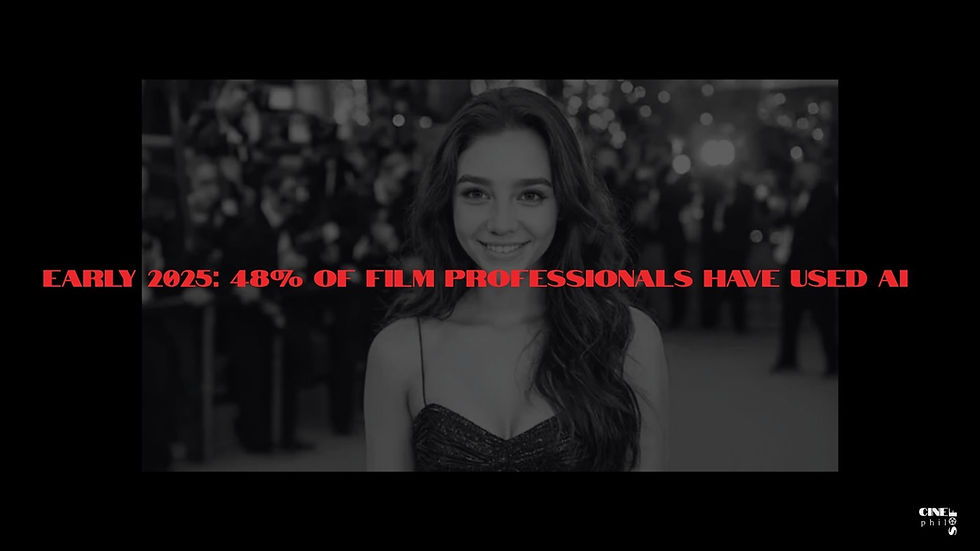
Some critics define this nostalgia as a recycling of content, going so far as to call it the death of original cinema. The creative spirit still lingers, but it has become a victim of the corporate “Pac-Man” of studios and the forces of wild capitalism. The increasing focus on STEM and artificial intelligence adds further pressure, while in the United Kingdom, real-term cuts to the Department for Culture, Media and Sport, gentrification, and the abandonment of cultural spaces exacerbate the issue. It remains a hegemenic industry for Britain-based filmmakers.
Despite these setbacks, we have the tools to "democratise" content—just a touch away from building our own platforms and testing our luck against the algorithms that divide us online. Culture always finds a way to grow. Nostalgia may comfort audiences, but it can also serve as a distraction while political and societal pressures intensify under a more conservative Labour government.
If 2025 was the year of nostalgia in cinema, perhaps 2026 will be the year we finally have the courage to ask: what stories haven’t been told yet?


Comments